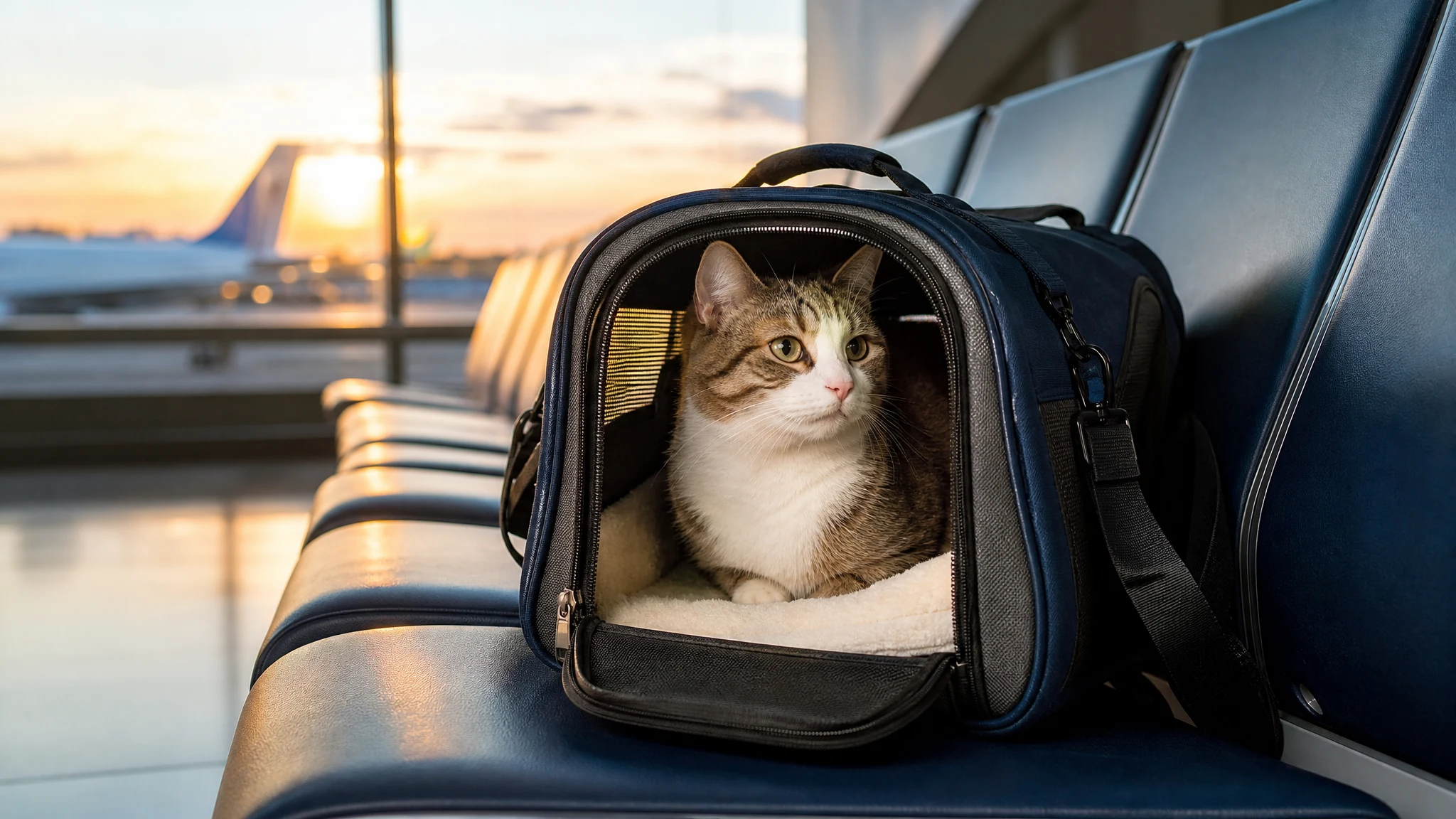
Flying With an Emotional Support Cat: What Changed in 2021
For years, a letter from a licensed mental health professional could carry a cat into an aircraft cabin at no charge. That arrangement ended in 2021, and the confusion it left behind still shapes the questions cat owners ask today. Is emotional support cat flying still protected by federal law? Does your letter matter at the airport? This deep dive takes the clinical, regulatory and practical view of what changed, what stayed the same, and how to travel responsibly with a cat who is part of your emotional wellbeing.
This article is informational content, not medical, mental-health or legal advice. A licensed mental health professional (LMHP) licensed in your state can tell you whether an emotional support animal is therapeutically appropriate for you, and a licensed attorney in your state can advise you on any housing dispute.
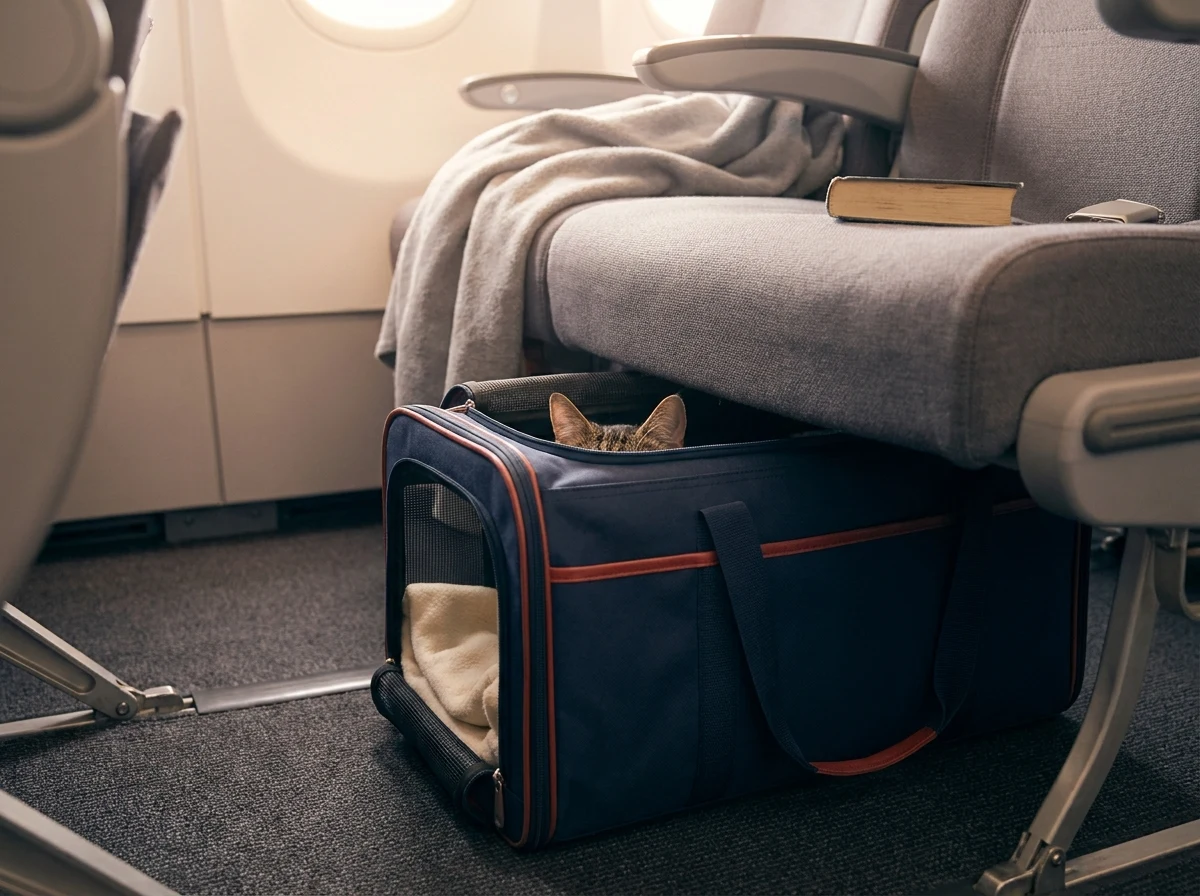
The Short Answer: Can You Fly With an Emotional Support Cat?
Yes, you can bring a cat on a flight, but not as an emotional support animal with special federal status. Since the U.S. Department of Transportation (DOT) amended its Air Carrier Access Act (ACAA) regulations, effective in early 2021, airlines are no longer required to accommodate emotional support animals. They may treat an ESA as an ordinary pet, which means the airline's pet policy, fees and carrier requirements apply.
So when people ask can you fly with an emotional support cat, the honest answer is: you can fly with your cat under the airline's pet rules, and an ESA letter will not change those rules. This is why emotional support animal flying is now a pet-travel question rather than a disability-accommodation question.
The Regulatory “Composition”: What the 2021 Rule Actually Contains
Think of the rule as a formula with a few key components. Reading each one separately makes the whole easier to understand.
Component 1: A narrower definition of “service animal”
The DOT's final rule defines a service animal, for air travel, as a dog individually trained to do work or perform tasks for the benefit of a person with a disability, including a physical, sensory, psychiatric, intellectual or other mental disability. Cats do not fall within that definition, and neither do emotional support animals of any species.
Component 2: Airlines may treat ESAs as pets
Because an emotional support animal is not a service animal under the rule, an airline is permitted to apply its standard pet policy. Some carriers stopped recognizing ESAs almost immediately; others phased out their programs over the following months. Policies differ by airline and change over time, so always confirm directly with your carrier before booking.
Component 3: Psychiatric service dogs remain protected
The rule preserved protections for psychiatric service dogs (PSDs), which are trained to perform specific tasks related to a psychiatric disability. A PSD is a different category from an ESA, requires individual task training, and is a dog. A cat cannot qualify, and an ESA letter is not a substitute for that training. If you believe a trained service dog may suit your situation, discuss it with your clinician.
Component 4: Housing protections are separate and unchanged
The 2021 change applied to air travel only. Housing rights under the Fair Housing Act (FHA) were not altered. HUD's notice FHEO-2020-01, “Assessing a Person's Request to Have an Animal as a Reasonable Accommodation Under the Fair Housing Act,” remains the federal guidance on how housing providers should evaluate requests involving assistance animals. Your letter continues to matter where you live; it simply does not govern the cabin.
Before and After: A Side-by-Side Comparison
| Topic | Before 2021 | After 2021 |
|---|---|---|
| Federal air-travel status of ESAs | Covered under the ACAA with documentation | Not covered; treated as pets at the airline's discretion |
| Cat in the cabin | Often free with an ESA letter | Allowed under the airline's pet policy, usually in a carrier, usually for a fee |
| Protected service animal | Dogs, plus some ESAs by airline policy | Trained service dogs only |
| Housing rights (FHA) | Letter from an LMHP supports a request | Unchanged |
What Research Suggests About Cats and Travel Stress
The regulatory change is only half the story. The other half is the cat. Veterinary behavior research and feline-handling guidance, including the feline-friendly handling guidelines published by veterinary organizations such as the American Association of Feline Practitioners, suggest that many cats find unfamiliar environments, carriers, confinement and loud settings stressful. Research suggests that cats who are gradually acclimated to a carrier tend to cope with transport better than those introduced to one on travel day, although individual temperament varies considerably.
Separately, research on the human-animal bond suggests that many people with anxiety or mood-related concerns find the daily presence of a companion animal calming. Those observations are part of why clinicians consider ESAs in some treatment plans. They are observations, not guarantees, and they say nothing about whether a particular flight will be comfortable for a particular cat.

Safety Profile and Contraindications
Air travel carries real considerations for cats. The following are general points to review with your veterinarian, not individualized advice.
- Brachycephalic breeds. Flat-faced cats, such as Persians and Exotic Shorthairs, may be more vulnerable to breathing difficulty in low-oxygen or high-temperature conditions. Many airlines restrict or refuse these breeds in the cargo hold.
- Cargo versus cabin. Veterinary and welfare organizations generally favor in-cabin travel for cats when it is possible, because temperature and pressure conditions and monitoring are more predictable.
- Sedation. The American Veterinary Medical Association advises against sedating pets for air travel except in specific circumstances directed by a veterinarian, because sedatives can affect breathing and temperature regulation at altitude. Never medicate your cat for a flight on your own.
- Underlying health conditions. Heart disease, respiratory disease, advanced age and kidney conditions may make air travel inadvisable. A pre-travel veterinary exam is the right starting point.
- Health certificates and vaccinations. Many airlines and destinations, including some states, require a recent health certificate and current rabies vaccination. Requirements vary, so verify them in advance.
- Your own wellbeing. If travel itself is a source of anxiety, discuss a plan with your clinician, who can help you decide what support makes sense.
Sourcing and Quality Indicators: How to Evaluate Travel Information
Because so much outdated advice remains online, the “quality” of your source matters as much as any ingredient list would. A few indicators help separate reliable guidance from the rest.
- Primary sources first. The DOT's published ACAA rule and your airline's own current pet policy are the authorities for air travel. Third-party summaries should point back to them.
- Dates. Anything describing free in-cabin ESA travel without a 2021 reference is probably out of date.
- No promises about airlines. Be cautious of any service claiming a letter, certificate, vest or ID card will secure free or guaranteed cabin access. Under current federal rules, none of these obligates an airline to do so.
- Clinician involvement. A valid ESA letter comes from an LMHP licensed in your state after an individual evaluation. Generic downloads or instant documents from fly-by-night online services carry no weight with a landlord, and they never did with a clinician.
A Practical Plan for Flying With Your Cat Now
- Consult your veterinarian about whether your cat is a suitable candidate for flying.
- Read the airline's pet policy for size limits, carrier dimensions, fees and how many animals are allowed per cabin.
- Book early, since many airlines cap the number of pets per flight.
- Acclimate the carrier over several weeks with treats, bedding that smells like home and short practice sessions.
- Prepare for security screening, where your cat will be removed from the carrier and held while the carrier is X-rayed. A harness fitted in advance and a calm, enclosed screening area are worth requesting.
- Carry identification, including a microchip, a collar tag and a recent photo of your cat, in case of separation.
Why Your ESA Letter Still Matters
None of this reduces the value of an ESA letter where it applies. Under the Fair Housing Act, a letter from a licensed mental health professional can support a reasonable accommodation request, such as a no-pets policy exception or a waiver of pet fees, when the clinician determines that an emotional support animal is therapeutically appropriate. It does not, by law, create rights in the cabin of an aircraft. To understand the full picture of what a cat can offer in a treatment plan, read our complete guide to emotional support cats.
State-Specific Rules That Affect Your Letter
Although the air-travel rule is federal and uniform across all states, the rules for obtaining a legitimate letter vary by state. Please check your own state's requirements before you begin.
- California, Montana, Arkansas, Iowa and Louisiana: state law requires a minimum 30-day established therapeutic relationship between you and the clinician before an ESA letter can be issued. Evaluations in these states comply with state law rather than following a faster timeline.
- Florida: Florida Statute 760.27 requires the clinician to be licensed in Florida or to have an established prior in-person relationship with you. Online-only providers licensed elsewhere cannot issue a valid Florida ESA letter.
- All other states: the clinician must hold a license in the same state where you live, and each person is evaluated individually. Approval is never automatic, and a clinician will decide whether an ESA is appropriate for you.
If you are ready to explore a housing-focused letter, our step-by-step guide to getting an ESA letter for your cat explains what to expect from the evaluation.
Frequently Asked Questions
Can an airline still choose to accommodate an emotional support cat?
An airline may offer its own policies, but it is no longer required by federal law to do so. Confirm with your carrier directly, and get the answer in writing where possible.
Does a letter from my clinician help at the airport?
Not under federal law. It remains useful for housing under the Fair Housing Act.
Can my cat be a psychiatric service animal?
Under the DOT's definition for air travel, service animals are dogs. Discuss any questions about trained service animals with your licensed clinician.
What if I am moving across state lines with my cat?
Check the pet-entry requirements of your destination and the pet policy of your airline, and review your housing rights under the laws of the state you are moving to. For disputes with a landlord, consult an attorney licensed in that state or your local legal aid office.
The Bottom Line
The 2021 change was a narrow one with wide consequences: it removed emotional support animals from the Air Carrier Access Act while leaving the Fair Housing Act intact. Cats can still fly as pets, with thoughtful preparation and a veterinarian's guidance, and a legitimate letter from a licensed clinician continues to support housing accommodations. If you are weighing whether an emotional support cat may be right for you, speak with a licensed mental health professional in your state and review your state's specific rules.
Disclaimer: This article is for general information only and is not medical, mental-health or legal advice. Consult a licensed mental health professional in your state about whether an emotional support animal is appropriate for you, a licensed veterinarian about your cat's fitness to travel, and an attorney licensed in your state for any housing dispute. Airline policies and regulations change; verify current requirements with the DOT and your carrier.
Ready to start your ESA letter?
Licensed clinician review. Compliant with state law.
Get My ESA Cat Letter