
What Is an ESA Cat? The Complete Guide to Emotional Support Cats and Letters
For many people living with anxiety, depression, or the weight of chronic stress, the steady presence of a cat is not a luxury but a daily source of calm. An ESA cat is a companion animal whose presence a licensed mental health professional has determined may be therapeutically helpful to a person with a mental or emotional health condition. This guide explains what an emotional support animal cat is, what it is not, how the letter process works in every U.S. state, and what federal housing law does and does not protect.
This article is informational content only. It is not medical, mental-health, or legal advice. Please consult a licensed mental health professional in your state about whether an emotional support animal is appropriate for you, and consult an attorney licensed in your state (or your local legal aid office) for any housing dispute.
Key Takeaways
- An ESA cat is a companion animal recommended by a licensed mental health professional (LMHP) as part of a person's treatment or support plan. It is not a pet with special paperwork, and it is not a service animal.
- The legal foundation for emotional support animals in housing is the federal Fair Housing Act (FHA), as explained in HUD's notice FHEO-2020-01. The protection comes from a letter written by a licensed clinician, not from a registry, ID card, or certificate.
- Cats are not covered by the Americans with Disabilities Act's service animal rules, and emotional support animals no longer have Air Carrier Access Act protections on flights.
- State rules differ. Florida (Statute 760.27) requires a Florida-licensed clinician or an established prior in-person relationship. California, Montana, Arkansas, Iowa, and Louisiana require a 30-day clinician relationship before a letter can be issued.
- A clinician evaluates every person individually. Approval is never automatic, and no legitimate provider can promise it.
Table of Contents
- What Is an ESA Cat?
- Who May Benefit From an Emotional Support Cat
- The ESA Letter: What It Is and Who Can Write It
- Housing Rights Under the Fair Housing Act
- State-by-State Rules You Should Know
- Registries, ID Cards, and Air Travel: Separating Fact From Fiction
- How to Get an ESA Letter for Your Cat, Step by Step
- Living Well With Your ESA Cat, and Common Questions
What Is an ESA Cat?
An ESA cat, short for emotional support animal cat, is a domestic cat that provides therapeutic comfort to a person with a diagnosed or clinically recognized mental or emotional health condition. The cat does not need special training. Its role is companionship: a warm, predictable presence that many people find steadying during difficult moments and difficult seasons of life.
The phrase “cat ESA” is often used interchangeably with “emotional support cat,” and both describe the same thing. What turns a beloved pet into an emotional support animal in the eyes of the law is not the cat's breed, behavior, or any piece of equipment. It is a recommendation from a licensed mental health professional who has evaluated the owner and concluded that the animal may help alleviate symptoms of the person's condition.
Emotional support animals, service animals, and therapy animals
These three terms are frequently confused, and the distinction matters legally.
| Type | Defining feature | Training required? | Species | Main legal framework |
|---|---|---|---|---|
| Emotional support animal (ESA) | Provides comfort through companionship; recommended by an LMHP | No special training | Cats, dogs, and other common domestic animals | Fair Housing Act (housing) |
| Service animal | Trained to perform specific tasks for a person with a disability | Yes, task training | Dogs (and in limited cases miniature horses) under the ADA | Americans with Disabilities Act |
| Therapy animal | Visits hospitals, schools, and similar settings to comfort others | Temperament evaluation, often handler training | Various | Facility policies, not individual rights |
Because the ADA's service animal definition is limited to dogs, a cat cannot be a service animal under that law. That is not a flaw in the emotional support model; it simply means an ESA cat's protections come from a different place, namely fair housing law.
Why cats make such well-suited emotional support animals
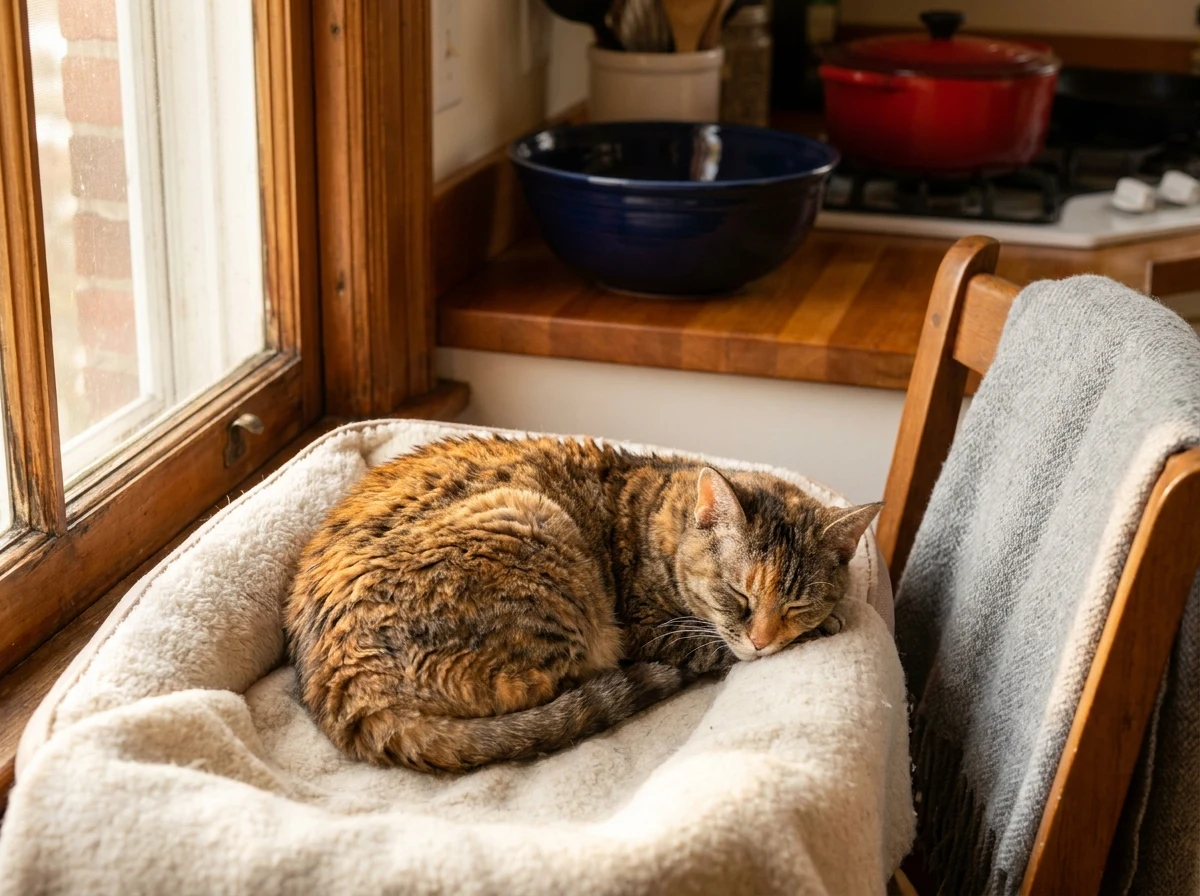
Cats suit many people's living situations. They are comfortable in apartments, they are quiet, they do not need to be walked, and their independent but affectionate nature appeals to people who find constant demands overwhelming. Many people with anxiety or depression report that the rhythm of caring for a cat, including feeding times, play, and the quiet ritual of a purr at bedtime, brings structure and a sense of being needed. A licensed clinician will determine whether an ESA is therapeutically appropriate for you, but it is easy to understand why so many owners ask about an ESA for a cat.
Who May Benefit From an Emotional Support Cat
Only a licensed clinician can determine whether you have a qualifying condition, and nothing in this article should be read as a diagnosis or a statement that you need an ESA. That said, it helps to understand the kinds of circumstances in which clinicians sometimes consider an emotional support animal as part of a broader treatment plan.
Conditions clinicians commonly consider
Many people with the following conditions find an emotional support animal helpful, and a clinician may take them into account when evaluating a request:
- Generalized anxiety disorder, panic disorder, and social anxiety
- Major depressive disorder and persistent depressive disorder
- Post-traumatic stress disorder (PTSD)
- Obsessive-compulsive disorder
- Attention-deficit/hyperactivity disorder and certain neurodevelopmental conditions
- Bipolar disorder and other mood disorders
- Grief, adjustment disorders, and stress-related conditions
The legal standard under the Fair Housing Act is not a list of approved diagnoses. HUD's guidance looks to whether a person has a disability, meaning a physical or mental impairment that substantially limits one or more major life activities, and whether the animal provides disability-related support. The clinician makes that determination based on a genuine evaluation of the individual.
What the evaluation actually looks like
A legitimate evaluation is a conversation with a licensed professional, conducted by video, phone, or in person depending on your state's rules. The clinician asks about your history, your symptoms, how they affect your daily life, and how your cat fits into your routine. The outcome is not predetermined. Some people are found to be appropriate candidates and receive a letter; others are not, and a clinician may recommend different forms of support instead. Be wary of any service that treats the evaluation as a formality.
The ESA Letter: What It Is and Who Can Write It
An ESA letter is a signed document from a licensed mental health professional confirming that you are under their care, that you have a condition that may qualify as a disability, and that an emotional support animal is part of your support plan. It is the single document that matters in a housing request.
Who is qualified to write one
A valid letter must come from a licensed mental health professional (LMHP) licensed in the same state as the client. Typical examples include:
- Licensed clinical social workers (LCSW)
- Licensed mental health counselors (LMHC) and licensed professional counselors
- Licensed marriage and family therapists (LMFT)
- Psychologists and psychiatrists
- Licensed primary-care providers, where state law permits
A pet store clerk, a website with no clinical staff, or a person who simply sells paperwork cannot issue a valid letter. HUD's FHEO-2020-01 notice (“Assessing a Person's Request to Have an Animal as a Reasonable Accommodation Under the Fair Housing Act”) specifically cautions that documentation from websites that sell certificates or registrations to anyone who answers a few questions, without a real assessment, is not sufficient on its own to establish a disability-related need.
What a strong letter typically contains
- The clinician's name, license type, license number, state of licensure, and contact details
- Confirmation that the clinician is treating or has evaluated you
- A statement that you have a condition that may qualify as a disability under the Fair Housing Act
- A statement that the animal provides support related to that condition
- The date of the letter and the clinician's signature
A well-written letter generally does not disclose your diagnosis. Under HUD's guidance, a housing provider is not entitled to your medical records or details of your condition.
How long is a letter valid?
The Fair Housing Act does not set a federal expiration date, but many landlords and property managers ask for a letter dated within the past year. Many clinicians recommend renewing annually, particularly when moving to a new home or changing landlords.

Housing Rights Under the Fair Housing Act
The Fair Housing Act (FHA), 42 U.S.C. § 3604(f)(3)(B), makes it unlawful for a housing provider to refuse a reasonable accommodation in rules, policies, or practices when the accommodation may be necessary to give a person with a disability an equal opportunity to use and enjoy a dwelling. Waiving a no-pets policy for an emotional support animal is a classic example of such an accommodation.
What the law generally allows
Under HUD's FHEO-2020-01 guidance, a person with a disability-related need for an assistance animal, including an emotional support cat, may request a reasonable accommodation, and the housing provider generally must evaluate it. In practice that often means:
- No pet rent or pet deposit. An assistance animal is not considered a pet under the FHA, so housing providers generally may not charge pet fees for it. A tenant may still be responsible for actual damage the cat causes.
- Waiver of breed, weight, and number-of-pets restrictions in many circumstances, since these rules are aimed at pets.
- Documentation review limited to what is necessary. If your disability is not readily apparent, the provider may ask for reliable information showing the disability-related need, typically a letter from a licensed professional.
When a request can be denied
The FHA does not give every tenant an unconditional right to any animal. A housing provider may lawfully deny or modify a request in limited situations, including when the specific animal poses a direct threat to the health or safety of others that cannot be reduced by another reasonable accommodation, when it would cause substantial physical damage to property, or when the request would impose an undue financial and administrative burden or fundamentally alter the housing operation. Denials should rest on an individualized assessment of the actual animal, not on assumptions about cats in general.
Housing the FHA does not cover
Certain housing is exempt from the FHA, such as some owner-occupied buildings with four or fewer units and certain single-family homes rented or sold without a broker. Other federal and state laws may still apply in those situations. Because exemptions turn on specific facts, speak with a licensed attorney in your state rather than assuming either way.
Making a request the right way
- Put your request in writing, and keep a dated copy.
- State that you are requesting a reasonable accommodation under the Fair Housing Act for an assistance animal.
- Attach your ESA letter from your licensed clinician.
- Be polite, factual, and willing to answer reasonable follow-up questions.
- Do not submit a registration number or ID card in place of a letter, because a landlord is not required to accept one.
If a landlord refuses, avoid escalating on your own. An attorney licensed in your state can explain your options, and your local legal aid office or fair housing organization can help with FHA enforcement, including filing a complaint with HUD.
State-by-State Rules You Should Know
The Fair Housing Act applies in every U.S. state and the District of Columbia, so the baseline protection for an emotional support animal cat is national. What varies is the process of obtaining a valid letter. Several states have passed laws that regulate how clinicians may assess clients and issue ESA documentation. These differences are best understood as safeguards that protect both clients and landlords, and a reputable provider treats compliance with them as a feature rather than a hurdle.
The general rule: a clinician licensed in your state
In every state, the safest approach is to work with a licensed mental health professional who is licensed in the state where you live. A clinician generally needs to be authorized to practice with you in your state, and landlords and fair housing agencies tend to give the most weight to letters from clinicians who clearly meet that standard.
Florida
Florida Statute 760.27 governs documentation for emotional support animals in housing. It requires that the supporting documentation come from a clinician who is licensed in Florida or who has an established, prior in-person relationship with the client. Online-only providers who are not licensed in Florida cannot issue a valid Florida ESA letter. Floridians should confirm their clinician's Florida licensure before paying for any evaluation.
California, Montana, Arkansas, Iowa, and Louisiana: the 30-day relationship requirement
These five states have enacted laws requiring that a client have an established therapeutic relationship with the licensing clinician for at least 30 days before an ESA letter can be issued:
- California (AB-468)
- Montana (HB-703)
- Arkansas
- Iowa
- Louisiana
If you live in one of these states, no honest provider can offer you a same-day or rushed letter. The waiting period is part of how the law ensures that your clinician actually knows you. Providers who comply with these laws are following {State} law as written, and that compliance is worth valuing because it protects the validity of your letter if a landlord ever questions it.
All other states and the District of Columbia
Other states generally rely on federal standards and general professional licensing rules, though state legislatures regularly consider new ESA bills and requirements can change. Some states also have laws penalizing misrepresenting a pet as an assistance animal. Before you move forward, check your state's current rules with a clinician licensed there, and consult an attorney licensed in your state if a housing question arises.
| State group | What to know |
|---|---|
| Florida | Statute 760.27: clinician must be Florida-licensed or have an established prior in-person relationship with you |
| California, Montana, Arkansas, Iowa, Louisiana | Minimum 30-day established clinician relationship before a letter is issued |
| All other states and D.C. | Work with a clinician licensed in your state; verify current state rules before you begin |
Registries, ID Cards, and Air Travel: Separating Fact From Fiction
Few areas of the emotional support animal world generate as much confusion as registration and travel. Clear information here can save you money and frustration.
Is registration required?
No. Registering your cat, receiving an ID card, or ordering a certificate is not a legal requirement, and there is no official government ESA registry. Your housing rights under the Fair Housing Act come only from a letter written by a licensed mental health professional. A registration number or ID card does not grant rights, it does not make a cat “certified” in any legal sense, and a landlord is not required to accept one in place of a letter.
Some providers, including ours, offer an optional registration service for owners who want it. The real benefits are practical rather than legal. The most valuable is lost-pet recovery: if your cat slips out of a door or goes missing during a move, a database entry with your contact details can help someone reunite you. Other optional extras may include lifetime registration, an ID card and certificate for your own convenience, and a discount on the ESA letter. These are conveniences, not legal credentials, and you should never feel pressured to buy them.
The warning about fake certificates
Be cautious of fly-by-night websites that sell a “$40 certificate” or an “instant ESA registration” with no clinician involved. HUD's FHEO-2020-01 notice makes clear that this kind of paperwork, issued without a real assessment, does not establish a disability-related need. Not only can it fail when presented to a landlord, but it may also undermine the legitimate requests of people who truly need accommodations.
Can an ESA cat fly in the cabin?
Not as an emotional support animal. In 2020, the U.S. Department of Transportation revised its Air Carrier Access Act rules, and since 2021 airlines are no longer required to recognize emotional support animals. They now treat ESAs as ordinary pets, which means your cat would follow the airline's standard pet policy, including carrier requirements and any applicable fees. An ESA letter does not change that.
If air travel is important to you, speak with your clinician about whether a psychiatric service dog could be appropriate in your situation, and always read your airline's pet policy before booking.
Public places, stores, and workplaces
Because a cat is not a service animal under the ADA, an ESA cat generally has no right of access to restaurants, stores, or other public places. Employers are not automatically required to allow an ESA at work either, though some may consider a request under their disability accommodation processes. The ESA letter's strongest and most dependable application is housing.
How to Get an ESA Letter for Your Cat, Step by Step
Whether you are exploring an ESA for a cat you already own or considering adopting one, the legitimate path follows a clear sequence.
Step 1: Understand your own needs
Before anything else, reflect honestly on what you are experiencing and how your cat fits into your life. If you are already seeing a therapist, start by talking to them. They know your history and may be able to provide a letter directly, subject to your state's rules.
Step 2: Choose a licensed professional in your state
Look for a licensed mental health professional who is licensed where you live. Ask for their license type and number, and verify it with your state's licensing board. A trustworthy provider will make this information easy to find and will never hide behind vague claims.
Step 3: Complete a genuine evaluation
Expect to answer real questions and to speak with a clinician. In California, Montana, Arkansas, Iowa, and Louisiana, expect an established relationship of at least 30 days before the letter is issued. In Florida, expect the clinician to be Florida-licensed or to have a prior in-person relationship with you.
Step 4: Receive and review your letter
If the clinician determines an ESA is therapeutically appropriate, you will receive a letter on the clinician's professional letterhead. Read it carefully. Check that it names you, includes the clinician's license details, and matches your state. Some providers can deliver letters quickly once the evaluation is complete in states without waiting periods, but speed should never come at the expense of a real assessment.
Step 5: Present it to your housing provider
Submit the letter with a short written accommodation request. Keep copies of everything, including dates and any responses.
Warning signs of an unreliable service
- Promises of guaranteed approval or an “instant” letter
- No live contact with a licensed clinician
- No clinician license details provided or verifiable
- Claims that a registration or certificate gives you legal rights
- Offers of a letter that ignores your state's requirements
- Suggestions that an ESA letter allows airline travel or public access for your cat
Living Well With Your ESA Cat, and Common Questions
An ESA letter opens the door to housing, but the daily work of being a good guardian is what makes the relationship therapeutic. A healthy, well-cared-for cat is also the best evidence that your accommodation request is reasonable.
Being a responsible ESA cat owner
- Keep up with veterinary care. Vaccinations, parasite prevention, and annual checkups protect your cat and your housing standing.
- Spay or neuter where appropriate, which reduces spraying, roaming, and noise complaints.
- Provide scratching posts, litter hygiene, and enrichment to protect the unit and reduce stress behaviors.
- Be a good neighbor. Manage noise and odors and keep your cat safely inside the home.
- Consider microchipping. It is one of the most reliable ways to recover a lost cat, whether or not you choose any optional registry.
- Respect the lease. You are responsible for any damage your cat causes beyond normal wear and tear.
Frequently asked questions
Can any cat be an ESA?
In general, yes. There are no breed or size requirements and no special training. What matters is the clinician's recommendation and, in housing, that the specific cat does not pose a direct threat or cause substantial damage.
Can I have more than one ESA cat?
A clinician may recommend more than one animal if each provides support related to your condition, but each request is evaluated individually, and a housing provider may reasonably ask about the need for multiple animals.
Does my landlord have to accept my letter?
Housing providers covered by the Fair Housing Act generally must consider a reasonable accommodation request supported by reliable documentation, but they may deny it in limited circumstances described in HUD's guidance. For specific disputes, consult an attorney licensed in your state.
Will I have to pay a pet deposit or pet rent?
Generally not for a properly documented assistance animal under the FHA, though you may be responsible for actual damages.
Is an online ESA evaluation legitimate?
It can be, provided it is conducted by a licensed clinician who is licensed in your state, involves a genuine assessment, and complies with your state's specific rules, such as the 30-day relationship requirement in California, Montana, Arkansas, Iowa, and Louisiana or the licensure requirements of Florida Statute 760.27.
Can I take my ESA cat on a plane?
Not under ESA protections. Since 2021, airlines treat emotional support animals as regular pets. Check your airline's pet policy.
Does an ESA letter replace therapy or treatment?
No. An emotional support animal is generally considered one part of a broader support plan. If you are struggling, please reach out to a licensed mental health professional, and if you are in crisis, contact local emergency services or the 988 Suicide & Crisis Lifeline in the United States.
A final word
The bond between a person and a cat can be quietly powerful, and for many people living with mental health challenges, that bond is a genuine part of staying well. The law recognizes this in the housing context, but it asks that the process be honest: a real clinician, a real evaluation, and a letter that reflects both. Take your time, verify credentials, understand your state's rules, and be skeptical of anything that sounds too fast or too easy.
Disclaimer: This guide is for general informational purposes only and does not constitute medical, mental-health, or legal advice. Laws and regulations change, and your situation is unique. Please consult a licensed mental health professional in your state to determine whether an emotional support animal is appropriate for you, review your state's current ESA requirements, and consult an attorney licensed in your state (or your local legal aid office) for any landlord or housing dispute.
Ready to start your ESA letter?
Licensed clinician review. Compliant with state law.
Get My ESA Cat Letter