Signed by a clinician licensed in your state on their own practice letterhead. Complies with all federal and state fair housing laws.
Your cat. Your clinician. A letter your landlord will actually accept.
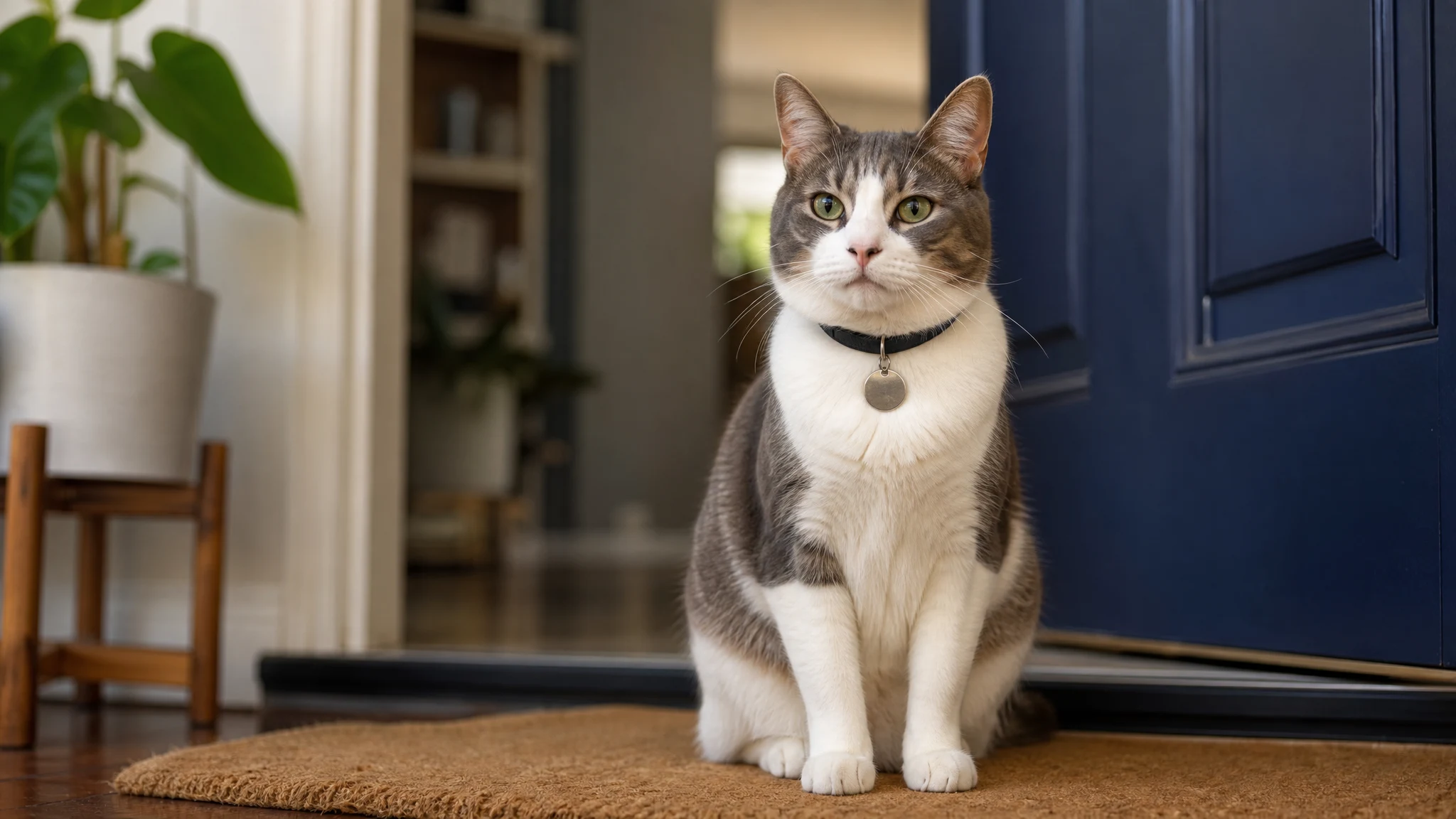
We'll email you after purchase to upload a photo of your cat.
Three simple steps, each handled by a licensed clinician, with nothing for you to figure out alone.
Complete a short, private questionnaire about your home, your cat and how you have been feeling. Take your time; there are no wrong answers, and nothing is shared with your landlord.
A licensed clinician in your state talks with you and decides whether an emotional support cat is therapeutically appropriate. In California, Montana, Arkansas, Iowa and Louisiana, state law requires a 30-day relationship first.
If approved, your letter usually arrives within an hour of your consultation. In the 30-day relationship states, it follows once that relationship is established.
Cats do not need walks, training or a yard. They need a lap, a routine and a window. That is exactly what makes them work.
A cat's presence is steady and undemanding. Purring, kneading and the simple weight of a cat on your lap are the kind of grounding that many people with anxiety describe as the thing that helps most.
No barking, no leash, no daily walks. An indoor cat fits a studio as well as a house, which is why cats are the easiest ESA to live with in rented housing.
Feeding, litter box cleaning, and play time give a day structure. For people managing depression, a small routine that someone else depends on is often easier to stick to.
An emotional support animal is not a service animal. Your cat does not need to learn tasks; the letter documents that its companionship supports you.
Most states follow the federal rules as written. Five add a condition of their own, and the letter has to meet it.
| State | What changes |
|---|---|
| California | 30-day clinician relationship before the letter (AB 468) |
| Montana, Arkansas, Iowa, Louisiana | 30-day clinician relationship required |
| Every other state | Federal Fair Housing Act and HUD guidance; licensed clinician in your state |
Explore our in-depth guides on qualifying for an ESA cat, what legal rights your ESA letter gives you and your cat, if you need to register your ESA cat, and more.

Choosing an apartment-friendly ESA in your state means weighing your therapeutic needs against the realities of rental living.

Qualifying turns on whether an ESA is therapeutically appropriate — a determination made by a licensed provider. Here's how eligibility works in your state.

An ESA letter is clinical documentation from a licensed professional. Here's the step-by-step path in your state, from intake to a signed letter.
The ESA market is full of registry scams and worthless PDFs. Learn how to verify a real clinician-issued letter in your state.

Federal fair housing protections create a real, enforceable framework for ESA accommodations where you live in your state.
Verified Trustpilot reviews from Emotional Support Animal customers.
Straightforward answers about letters, state rules and what to expect from your landlord.
Only a licensed mental health professional (LMHP), typically an LCSW, LMHC, LMFT, psychologist, psychiatrist or, in some states, a licensed primary-care provider, operating within their scope of practice and licensed in your state. Florida additionally requires the clinician to be Florida-licensed or to have seen you in person at least once.
We get most customers scheduled for their evaluation within 24 hours. If you are approved, your ESA cat letter follows shortly after your consult. California, Montana, Arkansas, Iowa and Louisiana require a 30-day clinician relationship first.
Yes. HUD guidance treats any domesticated animal as a possible assistance animal, and cats are the second most common ESA. There is no training requirement; the letter documents that your cat's companionship is therapeutically appropriate for you.
No. A registry number, ID card or certificate carries no legal weight by itself; Florida's statute says so in as many words. What matters is a letter from a licensed therapist.
It documents that an emotional support animal is therapeutically appropriate for you. Landlords, condo and homeowner associations and campus housing must consider it as a reasonable accommodation request under the Fair Housing Act, including in no-pets buildings.
Under the FHA a landlord generally cannot charge a pet deposit or extra rent for an assistance animal. You remain responsible for any actual damage your cat causes.
No. The DOT removed ESAs from the Air Carrier Access Act in 2021, so airlines treat ESA cats as pets. Most carriers allow cats in the cabin under their pet policy for a fee.
A licensed therapist decides, based on whether an emotional support animal is therapeutically appropriate for you. Many people with anxiety, depression, PTSD and other recognised conditions qualify, but the determination is individual and never automatic.
Our ESA cat letter costs $169.99. The consult is risk-free: if the LMHP does not approve you, you are fully refunded, and if your landlord denies a valid letter and we cannot help resolve it, you also receive a full refund. No hidden fees.
No law sets a hard expiry, but most landlords expect a letter under a year old, so annual renewal is best practice.
Independently rated by real ESA customers on Trustpilot, Google, and Shopper Approved.


