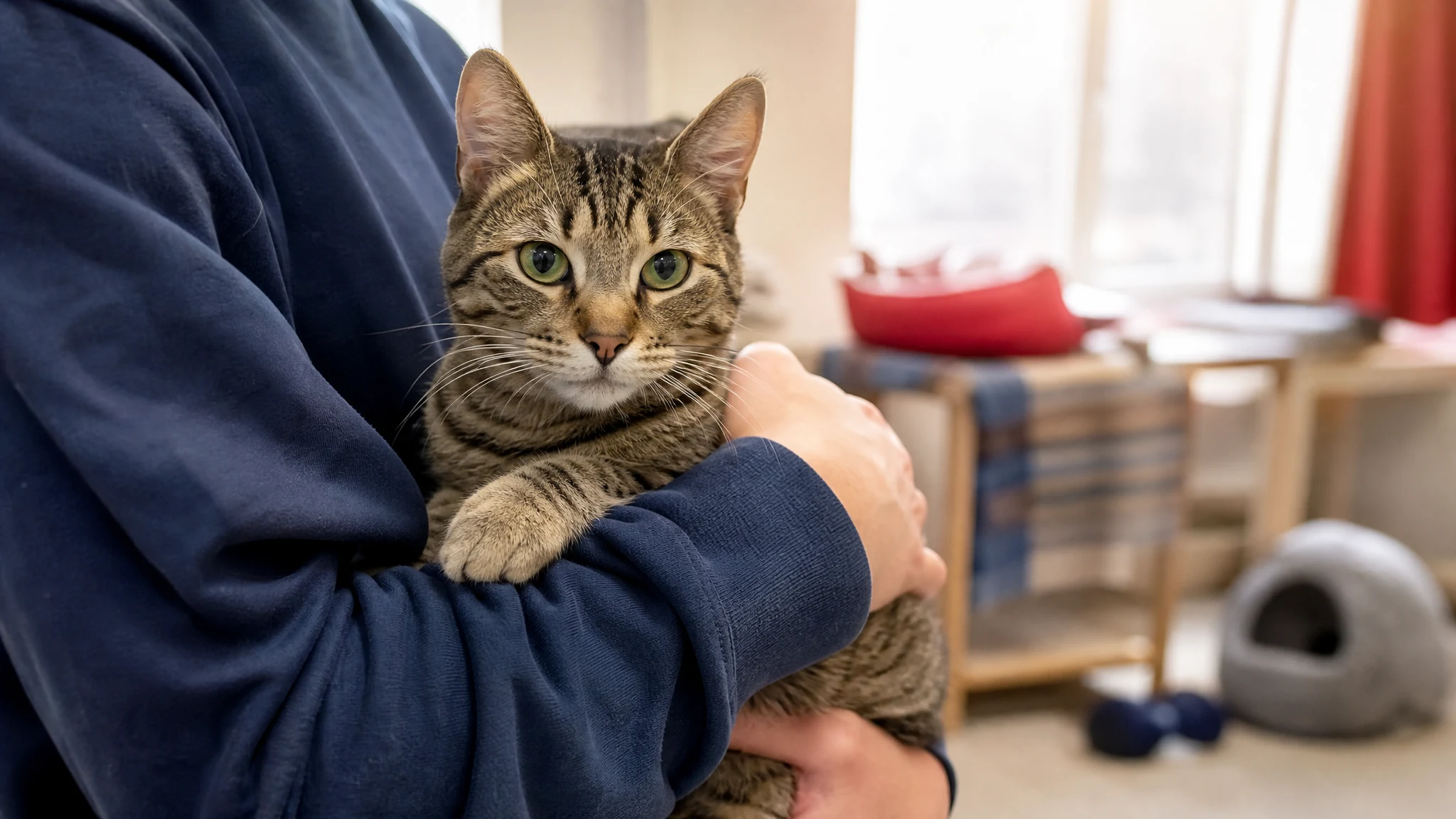
ESA Cat vs Therapy Cat vs Service Cat: Which One Is Real and What Each One Does
Few topics generate more confusion among cat owners than the vocabulary of working animals. The words “emotional support,” “therapy” and “service” are used interchangeably in conversation, on social media and even by some landlords, yet they describe three distinct roles with three distinct legal footings. If you have ever searched for service cats for anxiety or wondered what is a therapy cat, you have already discovered how tangled the language can be.
The short answer to the question in our title is that all three are real concepts, but they are not equally recognized by law, and they are not interchangeable. This guide sets out, in plain language, what each type of cat does, what protections (if any) attach to it, and which arrangement tends to fit which situation. It is written for cat owners anywhere in the United States, and where state rules differ, we say so precisely.
The Quick Answer
- Emotional support cat (ESA): a companion animal that a licensed mental health professional has determined may be therapeutically helpful to its owner. Its protection comes from federal fair housing law, and it applies to housing.
- Therapy cat: a well-socialized cat that, with its handler, visits hospitals, schools, nursing homes and similar places to comfort other people. It has no special legal access rights; it enters only where the facility has agreed.
- Service cat: this is the category that does not exist in the way most people hope. Under the Americans with Disabilities Act (ADA), a “service animal” is defined as a dog individually trained to perform tasks for a person with a disability. Cats do not qualify under that federal definition.
So when someone asks which one is “real,” the honest reply is that ESA cats and therapy cats are both real and legitimate, but they do different jobs. “Service cat” is a popular phrase without the legal standing the phrase implies.
What Is a Therapy Cat?
Readers often ask what is a therapy cat, and the definition is straightforward. A therapy cat is a cat that has been evaluated for temperament and behavior and then volunteers, alongside its handler, to provide comfort to people other than its owner. Typical settings include hospitals, hospices, assisted-living communities, libraries, university study-break events and school reading programs.
The key distinction is the direction of the benefit. An emotional support cat helps one person, its owner, in the home. A therapy cat helps many people in a structured visit. This is what people usually mean by cat therapy: animal-assisted activity or animal-assisted therapy, in which the animal’s calm presence is part of a program run by a facility or organization.
Can a cat be a therapy animal?
Yes. Can a cat be a therapy animal is one of the most common questions we receive, and the answer is that cats can and do serve in therapy roles. Several national therapy-animal organizations register cats alongside dogs and other species. That said, the path is demanding, because the temperament required is specific. A therapy cat must tolerate unfamiliar environments, medical equipment, sudden noises and being handled by strangers, often while wearing a harness and traveling in a carrier. Many wonderful pet cats simply do not enjoy this, and that is perfectly acceptable; forcing an unwilling cat into the role is neither fair to the animal nor safe for the people involved.
Typical requirements, which vary by organization and facility, include a veterinary health check and up-to-date vaccinations, a handler-and-animal evaluation, and a minimum period of ownership. Requirements change, so confirm the current details with the organization you are considering.
Legal status of a therapy cat
A therapy cat has no federal right of access to public places and no housing protection by virtue of being a therapy animal. Its access is a privilege granted by each host facility, and a facility may decline. A therapy cat is also not an ESA simply because it volunteers; the two designations answer different questions.
What Is an Emotional Support Cat?
An emotional support animal provides therapeutic benefit through companionship. No special training is required, because the benefit comes from the bond itself. Many people living with anxiety, depression or other conditions report that a cat’s steady presence, predictable routines and purring help them feel calmer, though whether an ESA is appropriate for any particular person is a decision for a licensed clinician. For a fuller grounding, see our guide on what an ESA cat is and how emotional support works.
Where an ESA cat is protected
The principal federal protection is the Fair Housing Act (FHA). Under HUD’s notice FHEO-2020-01, Assessing a Person’s Request to Have an Animal as a Reasonable Accommodation Under the Fair Housing Act, a housing provider must consider a request to keep an assistance animal as a reasonable accommodation for a person with a disability, even where a building has a no-pets policy or pet fees. A landlord may request reliable documentation when the disability or the disability-related need is not obvious, and a letter from a licensed mental health professional is the customary form of that documentation.
Some housing is outside the FHA’s reach, such as certain owner-occupied buildings with four or fewer units and some single-family homes rented or sold without a broker. Because exemptions and local rules can apply, do not assume your situation is covered or excluded without checking.
Where an ESA cat is not protected
It is equally important to be candid about the limits. Since the Department of Transportation’s 2021 revision to its Air Carrier Access Act rules, airlines no longer treat emotional support animals as a protected category; they are handled as ordinary pets, subject to each airline’s pet policy and fees. An ESA letter does not create public-access rights in restaurants, stores or workplaces either.
A note on registries, ID cards and certificates
Some services sell registration, ID cards or certificates, and ESA Cat offers an optional registration service as well. To be clear: registration is not a legal requirement, and housing rights under the Fair Housing Act come only from a letter written by a licensed mental health professional. A landlord is not obliged to accept a registration number or ID card in place of that letter. Where registration does have genuine value is practical: a lost-pet recovery database that can help reunite you with a cat who slips out of a door, followed by conveniences such as an ID card for your own records. Treat it as an optional extra, never as a source of legal rights.
What About “Service Cats for Anxiety”?
Many people searching for service cats for anxiety are hoping to find a way to have a cat accompany them in public. It is worth addressing directly, because the answer is disappointing but important to understand before money or effort is spent.
Under the ADA, a service animal is a dog (and, in a narrow provision of the regulations, a miniature horse may be accommodated) that has been individually trained to do work or perform tasks directly related to a person’s disability. For a psychiatric condition, that might mean a dog trained to interrupt panic-related behaviors or to remind a person to take medication. Cats are not included in the federal definition, and an organization that sells a “service cat” credential is not conferring an ADA right of access.
Two further points are worth stating plainly:
- Task training versus comfort. The ADA distinction turns on trained tasks. The comforting effect of an animal’s presence, however real to the owner, is not by itself a task under the federal definition.
- State and local laws vary. Some state laws address assistance animals more broadly than federal law does. If you believe a state or local rule may apply to your circumstances, consult a licensed attorney in your state rather than relying on a website’s summary.
For a person who wants an animal for anxiety and whose goal is a stable home life with a cat, the emotional support route is usually the legitimate one. For a person who needs a trained animal to accompany them in public, a psychiatric service dog is the recognized path, and that is a conversation to have with a clinician.
Side-by-Side Comparison
| Attribute | Emotional Support Cat (ESA) | Therapy Cat | Service Cat |
|---|---|---|---|
| Primary purpose | Comfort to its owner through companionship | Comfort to others during volunteer visits | Not a recognized category under federal law |
| Training required | None required by law; good household behavior expected | Temperament evaluation; handler training often required | Not applicable under the ADA definition |
| Federal law | Fair Housing Act (HUD FHEO-2020-01) | No special federal protection | ADA covers dogs (and limited miniature-horse provisions), not cats |
| Housing protection | Yes, as a reasonable accommodation, with proper documentation | No, unless also separately qualified as an ESA | No ADA-based protection for cats |
| Public-access rights | No | Only by facility invitation | No for cats |
| Air travel | No; treated as a pet since the 2021 DOT rule | No; treated as a pet | No for cats |
| Documentation | Letter from a licensed mental health professional | Organization evaluation and registration; facility requirements | Not applicable |
| Who benefits | One person (the owner) | Many people during visits | Not applicable |
Pros and Cons of Each Option
Emotional support cat
Advantages
- Recognized housing protection under the Fair Housing Act when properly documented.
- No training program or public evaluation for the cat; your pet lives as it always has.
- A clinician-guided process that treats your wellbeing as the starting point.
- Cats suit apartment living well, being quiet and compact.
Limitations
- Protection is largely limited to housing; there are no public-access or airline rights.
- Documentation must come from a licensed professional, and approval is never automatic.
- Some housing is exempt from the FHA, and landlords may lawfully decline in certain circumstances, such as where an animal poses a direct threat or would cause undue burden.
Therapy cat
Advantages
- A meaningful way for an outgoing cat and its owner to give back to the community.
- Structured evaluation provides confidence in the cat’s temperament.
- Supported by organizations that offer insurance and guidance for volunteer teams.
Limitations
- No housing, public-access or travel rights from the designation itself.
- Demands a rare temperament; many cats are stressed by travel and crowds.
- Requires ongoing time commitment, veterinary upkeep and handler involvement.
“Service cat”
Advantages
- None that are legally recognized under the ADA for cats.
Limitations
- No federal access rights, regardless of vests, certificates or online credentials.
- Misrepresenting a pet as a service animal can create friction with businesses and, under some state laws, legal exposure.
- Can distract from the pathways that actually work, such as an ESA letter for housing or a psychiatric service dog for public-access needs.
Best For: Recommendations by Use Case
| Your situation | Likely best fit | Why |
|---|---|---|
| You rent and your building restricts pets | ESA cat, with a letter from a licensed professional | The Fair Housing Act is the framework that addresses reasonable accommodation in housing. |
| Your cat is sociable, unflappable and you want to volunteer | Therapy cat | Cat therapy visits suit confident, well-socialized cats and willing handlers. |
| You hope to bring your cat into stores and restaurants | None of the three provides this for a cat | The ADA applies to trained service dogs; discuss options with a clinician. |
| You want a trained animal to assist in public with a psychiatric condition | Psychiatric service dog | This is the recognized category under the ADA. |
| You want to fly with your cat | Standard pet travel | Airlines treat ESAs as pets; check the airline’s pet policy and fees. |
| Your cat is shy or older and you want companionship at home | ESA cat, if a clinician agrees it is appropriate | No public performance is required of the cat. |
State-Specific Rules You Should Know
The Fair Housing Act is federal, so it applies in every state, but the way a licensed clinician may assess and document an ESA need can be shaped by state law. Laws change, so verify the current rules with a licensed clinician in your state before relying on any summary.
- Florida: Florida Statute 760.27 requires that the clinician providing ESA documentation be licensed in Florida, or have an established prior in-person relationship with the client. Online-only providers licensed in other states cannot issue a valid Florida ESA letter.
- California (AB-468), Montana (HB-703), Arkansas, Iowa and Louisiana: state law requires an established therapeutic relationship of at least 30 days between the client and the clinician before an ESA letter may be issued. A letter that complies with these laws takes the time the law requires, and we consider that a sign of a careful process, not an obstacle.
- All other states: the federal framework applies, and the letter must still come from a licensed mental health professional who is licensed in the same state as the client. Some states have their own rules on documentation or on misrepresenting an animal’s status, so ask your clinician what applies where you live.
If you decide to pursue an ESA letter, our walkthrough on how to get an ESA letter for your cat, step by step explains what the evaluation involves and what to expect at each stage.
How to Spot Misleading Claims
The confusion around these terms has created a market for questionable products. A few warning signs are worth knowing:
- Any promise of “guaranteed approval” or an “instant letter.” A legitimate clinician evaluates each person individually, and approval is never automatic.
- Registries that charge a small fee for a “certificate” and imply it carries legal force. No registry confers rights, and a cat is not “certified” as a matter of law.
- Claims that an ESA letter allows airline cabin travel, or that a vest turns a cat into a service animal.
- Letters issued without any contact with a licensed mental health professional, or from a professional not licensed in your state.
The Verdict
Taking the three options in turn, here is how we would summarize them honestly.
Which one is real? Emotional support cats and therapy cats are both real, established roles. Service cats, in the legal sense, are not: the ADA recognizes dogs, and no credential sold online changes that.
Which one is right for most cat owners? For the person asking whether a cat can help with their own mental health at home, and who may need housing protection, the emotional support route is the one that matches the need. It is supported by HUD’s FHEO-2020-01 guidance, it asks nothing of the cat beyond being a well-behaved companion, and it begins with a conversation with a licensed clinician about whether an ESA is therapeutically appropriate for you. For the person with an unusually outgoing cat and a desire to volunteer, therapy work is a rewarding complement, and the two roles can coexist: a cat may be someone’s ESA at home and a therapy cat on weekends, though each designation is established separately.
What we would avoid. We would steer readers away from purchasing “service cat” products, from expecting an ESA letter to open doors outside housing, and from any provider who promises a result before a clinician has evaluated you.
Frequently Asked Questions
Is a therapy cat the same as an ESA?
No. A therapy cat serves other people through volunteer visits and has no inherent housing protection. An ESA serves its owner and may be covered by the Fair Housing Act when documented by a licensed mental health professional.
Can a cat be a therapy animal if it is also my ESA?
It can, provided the cat has the temperament and meets the requirements of the therapy organization and facility. The two statuses are separate, and one does not substitute for the other.
Can I get a service cat for anxiety?
Under the ADA, cats are not recognized as service animals. People looking for a trained animal to assist in public with a psychiatric condition are generally directed toward psychiatric service dogs, and a licensed clinician can discuss whether that is appropriate. An ESA cat may still offer companionship and housing protection at home.
Does my landlord have to accept my ESA cat?
Housing providers covered by the Fair Housing Act must consider reasonable-accommodation requests, but covered does not mean automatic. Exemptions exist, and a request may lawfully be declined in limited circumstances. If a dispute arises, consult a licensed attorney in your state, or contact your local legal aid office or fair housing organization.
Important Disclaimer
This article is informational content only. It is not medical, mental-health or legal advice, and it does not establish a clinician-patient or attorney-client relationship. Whether an emotional support animal is therapeutically appropriate for you can only be determined by a licensed mental health professional who is licensed in your state. Laws and regulations, including state ESA rules, change, so review the current rules for your state before acting. For housing disputes or questions about your legal rights, consult an attorney licensed in your state, or your local legal aid office.
Ready to start your ESA letter?
Licensed clinician review. Compliant with state law.
Get My ESA Cat Letter