Best Cat Breeds for Emotional Support (and Why Mixed-Breed Cats Win)
Anyone searching for the best cat for emotional support eventually meets the same question: does breed matter? The honest answer is that it matters less than most breed guides suggest, and more than none at all. Temperament, early socialization, health, and the fit between a cat's energy and your daily routine do most of the work. Breed simply offers a useful, if imperfect, starting map.
This guide walks through six emotional support cat breeds that are frequently described as calm, affectionate, and people-oriented, then makes the case for the cat that quietly outperforms them in many homes: the mixed-breed domestic cat. Every item follows the same format so you can compare them easily, and each closes with a practical takeaway. Throughout, remember that an emotional support animal is defined by its therapeutic role in a person's life, not by pedigree. A licensed clinician, not a breed chart, determines whether an ESA is appropriate for you.
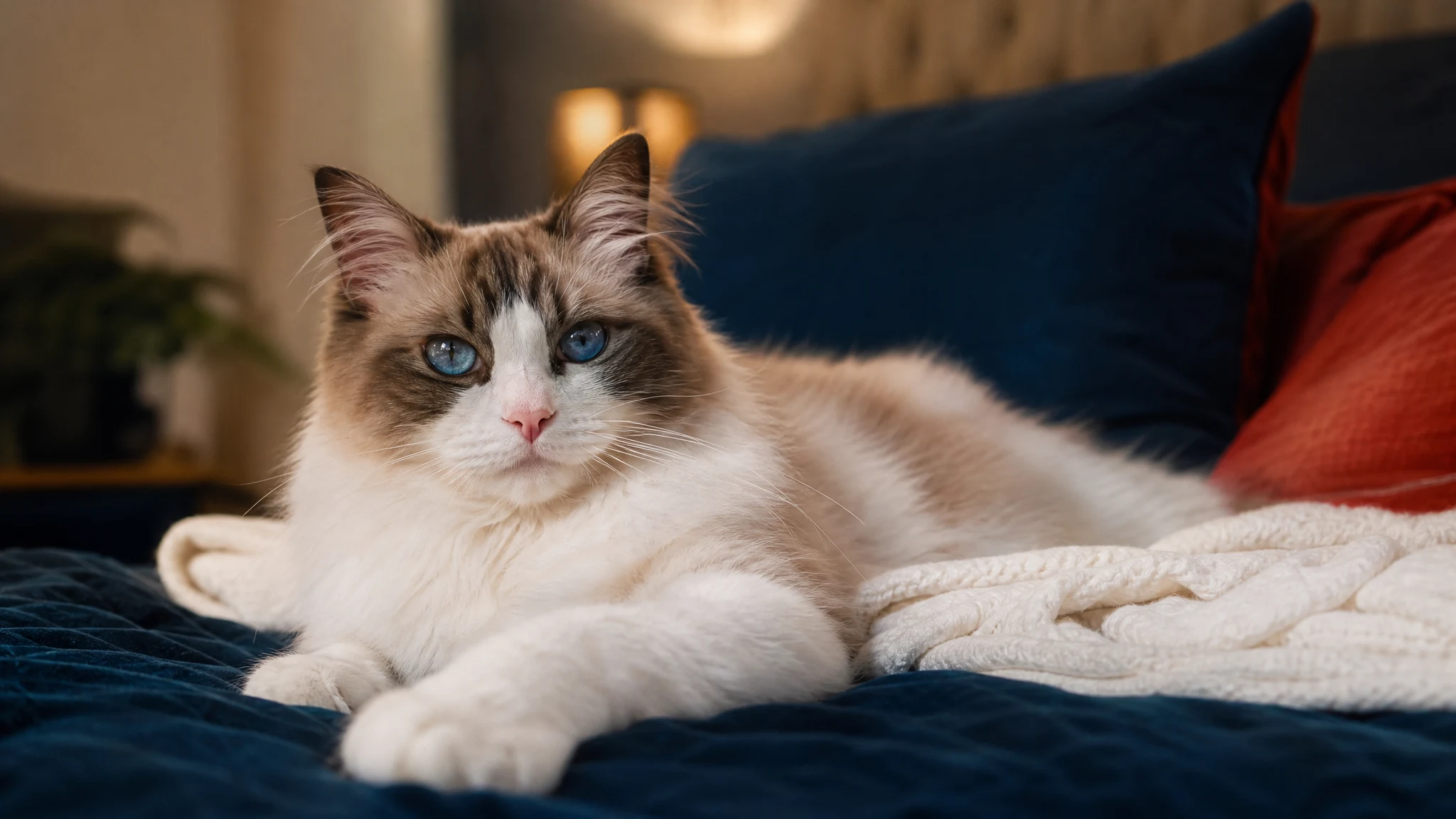
1. Ragdoll: The Famously Relaxed Lap Cat
Ragdolls earn their name from a tendency to go soft and limp when held, and many owners describe them as among the most placid of the pedigreed breeds. They commonly follow their people from room to room and tolerate handling well, qualities that many people with anxiety or low mood find comforting. Their semi-long coats are plush and pleasant to stroke, which can make daily petting feel like a built-in calming ritual.
The trade-offs are practical. Ragdolls are large, often reaching 15 pounds or more, and their coats need regular brushing to prevent matting. They also tend to be companionable to a fault, so a household where the cat would be alone for long stretches may not suit them. Responsible breeders screen for heart conditions common to the breed, and prices for kittens can be substantial.
Practical takeaway: A Ragdoll may suit you if you are home often and want a gentle, handleable companion, provided you are comfortable with weekly grooming and a higher upfront cost.
2. Maine Coon: The Gentle Giant With a Social Streak
The Maine Coon is one of the largest domestic breeds, yet it is often described as soft-voiced, curious, and good-natured. Many owners report a dog-like habit of greeting visitors and shadowing family members, and the breed's trilling chirp can be strangely soothing. For people who find a quiet home isolating, an engaged, communicative cat may add welcome presence to the day.
Size is the main consideration. A Maine Coon needs sturdy furniture, a large litter box, and a long, thick coat that benefits from consistent combing. Like several large breeds, it can be predisposed to hip and heart concerns, so ask any breeder about health testing and plan for routine veterinary care.
Practical takeaway: Choose a Maine Coon if you have the space and the patience for grooming, and want a cat that interacts rather than simply observes.
3. British Shorthair: Calm, Dignified, and Low-Drama
British Shorthairs are typically sturdy, even-tempered cats that enjoy company without demanding constant attention. Rather than climbing curtains, many prefer to settle nearby and keep you company, which can suit people who want a quiet presence more than an energetic playmate. Their dense, short coat is easier to maintain than a long-haired breed's.
They are generally not enthusiastic lap sitters, which surprises some new owners. Affection tends to arrive on the cat's terms. The breed is also prone to weight gain, so measured feeding and regular play matter, and some lines carry a heart-related risk worth discussing with a breeder or veterinarian.
Practical takeaway: A British Shorthair can be a good match for a steady, predictable household where companionship means shared space rather than constant cuddling.
4. Persian: A Serene Companion for Slow, Quiet Days
Persians are widely known for a mellow, sweet disposition and a preference for calm surroundings. They are rarely athletic, and many are content to rest beside you for hours. If your routine is gentle and your home is peaceful, a Persian may fit naturally, and the soft, flowing coat is part of the appeal for many owners.
That coat is also the commitment. Persians generally need daily grooming, and their flat faces can contribute to breathing, tear-duct, and dental issues. Prospective owners should be ready for higher veterinary involvement and should seek breeders who prioritize health over exaggerated features.
Practical takeaway: Consider a Persian only if you can reliably provide daily grooming and are prepared for ongoing health care needs.
5. Birman: The Devoted, Quietly Affectionate Companion
Birmans are often described as gentle, sociable cats with silky coats that resist tangling better than many long-haired breeds. They tend to bond closely with their families, enjoy being nearby, and adapt to a moderate level of household activity. For owners seeking affection without high-intensity demands, they sit in a pleasant middle ground.
Birmans generally prefer company, so they do best with someone at home for much of the day or with another pet for companionship. They are less common than other breeds on this list, which can mean longer waits and higher costs, and breeders should be asked about inherited conditions.
Practical takeaway: A Birman may be worth the search if you want a devoted, easygoing cat with manageable grooming needs.
6. Siamese: The Talkative Confidant
Siamese cats are intensely social and vocal. Some people find that a cat who answers when spoken to creates a sense of connection and routine, which many owners describe as helpful on lonely days. They are intelligent, attached to their people, and often enjoy interactive play and learning simple tricks.
The same qualities can be demanding. A Siamese expresses boredom and loneliness loudly, and the constant commentary can wear on people who need a quiet home. They thrive with attention, puzzle toys, and a daily play schedule.
Practical takeaway: Pick a Siamese if you want an interactive, conversational companion and can commit to daily engagement; skip it if you need calm and quiet.
7. The Mixed-Breed Domestic Cat: Why Mixed-Breed Cats Win
Here is the case for the cat that rarely appears in breed guides. Domestic shorthairs, longhairs, and every blend in between make up the large majority of cats in the United States, and they offer a range of temperaments just as wide as any pedigree. Because there is no breed label to lean on, you choose by meeting the individual cat, and personality is a far better predictor of a good emotional support match than coat pattern or lineage.
There are practical advantages too. Mixed-breed cats often benefit from broader genetic diversity, which may lower the odds of some inherited conditions, though no cat is guaranteed healthy. Adoption fees are modest compared with breeder prices, and shelters and rescues frequently describe each cat's behavior in a foster home, so you can look for the calm, people-loving temperament you want. Adopting also gives a cat a home, which many owners find meaningful in itself.
Finally, nothing in federal housing law requires a pedigree. Under the Fair Housing Act, a reasonable accommodation request is assessed on the person's disability-related need and the animal's role, as described in HUD's FHEO-2020-01 notice, not on breed. A rescued tabby is evaluated the same way as a show-quality Ragdoll.
Practical takeaway: Visit a shelter, ask staff about the cats who seek out people, and spend time with a few individuals before choosing. A confident, affectionate adult cat whose temperament is already known can be the safest bet of all.
How to Choose the Best Cat for Emotional Support
Whatever you are drawn to, weigh these factors honestly:
- Temperament over type: Look for a cat that approaches people, tolerates handling, and recovers quickly from noise.
- Age: Adult cats have established personalities, which removes guesswork that kittens cannot offer.
- Your routine: Match the cat's energy and need for company to your daily life.
- Care capacity: Be realistic about grooming, veterinary costs, and space.
If you would like background on how emotional support cats are defined and what separates them from pets and service animals, our complete guide to emotional support cats covers the essentials.
What Housing Protection Actually Requires
Federal housing protection for an emotional support cat comes from the Fair Housing Act and is described in HUD's FHEO-2020-01 notice, Assessing a Person's Request to Have an Animal as a Reasonable Accommodation Under the Fair Housing Act. The documentation that supports a request is a letter from a licensed mental health professional (LMHP) who is licensed in your state, such as an LCSW, LMHC, LMFT, psychologist, psychiatrist, or, where state law permits, a licensed primary-care provider. A clinician determines individually whether an ESA is therapeutically appropriate for you; approval is never automatic.
Registration, ID cards, and certificates are not a legal requirement, and they do not create housing rights. Only a letter from a licensed clinician does. Some people choose optional registration for practical reasons, chiefly lost-pet recovery, but a landlord is never obliged to accept a registration number or ID card in place of the letter. Be wary of any service charging a small fee for an instant “certificate” with no clinician involved.
State rules add important differences, so check what applies where you live:
- Florida: Florida Statute 760.27 requires the clinician to be licensed in Florida or to have an established prior in-person relationship with you. Online-only providers licensed elsewhere cannot issue a valid Florida letter.
- California, Montana, Arkansas, Iowa, and Louisiana: State law requires an established therapeutic relationship of at least 30 days with the clinician before a letter can be issued. This reflects each state's standard of care, and turnaround times in these states are not accelerated.
- All other states: The clinician must be licensed in your state, and your state may have additional requirements, so review your state's current rules.
When you are ready, our step-by-step process for getting an ESA letter for your cat explains what to expect from a clinician evaluation.
A Note on Travel
The U.S. Department of Transportation removed emotional support animals from the Air Carrier Access Act in 2021, so airlines now treat ESAs as ordinary pets. An ESA letter does not provide air-travel rights. Check your airline's pet policy directly, and speak with a clinician if you wish to explore options such as a psychiatric service dog.
Final Thoughts
Ragdolls, Maine Coons, British Shorthairs, Persians, Birmans, and Siamese can each be wonderful companions, and the best cat breeds for emotional support are the ones whose traits match your life. Yet the strongest predictor of a good bond is the individual cat, which is why the humble mixed-breed so often wins. Meet the cat, trust the connection, and let a licensed clinician guide the rest.
Disclaimer: This article is informational content only and is not medical, mental-health, or legal advice. It does not diagnose any condition or establish that you need an emotional support animal. Please consult a clinician licensed in your state to discuss whether an ESA is appropriate for you, and review your state's specific rules. For landlord disputes, consult an attorney licensed in your state, or contact your local legal aid office for help with Fair Housing Act enforcement.
Ready to start your ESA letter?
Licensed clinician review. Compliant with state law.
Get My ESA Cat Letter