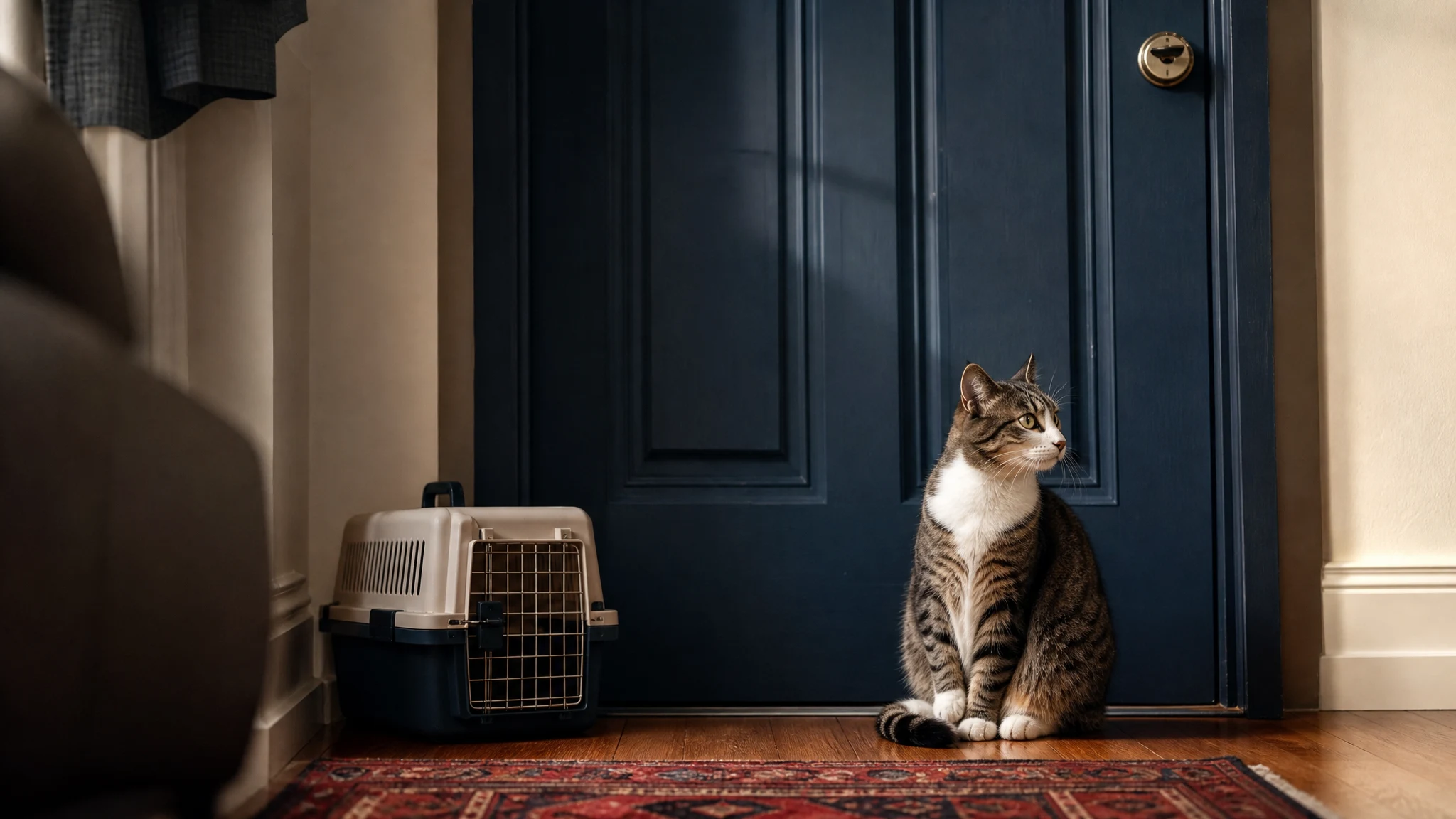
Can a Landlord Deny an Emotional Support Cat? The Short List of Legal Reasons
If you are asking can a landlord deny an emotional support cat, the reassuring answer is that the grounds are narrow. Under the federal Fair Housing Act (FHA), a housing provider generally must consider a request to live with an emotional support animal as a reasonable accommodation for a disability, and may refuse only in a handful of defined circumstances. This guide walks you through those circumstances, how to prepare a request that addresses them, and how Florida and Texas apply the same framework. Throughout, rules differ in detail from one U.S. state to the next, so treat this as orientation rather than a verdict on your own situation.
This article is informational content only. It is not medical, mental-health, or legal advice. Please consult a licensed mental health professional in your state, and for any housing dispute, an attorney licensed in your state.
The Federal Framework in Brief
HUD's notice FHEO-2020-01, Assessing a Person's Request to Have an Animal as a Reasonable Accommodation Under the Fair Housing Act, is the federal guidance that housing providers and tenants rely on. It explains that a person with a disability may request an assistance animal, including an emotional support cat, even where a building has a no-pet policy. For a deeper walkthrough of how those protections work in practice, see our guide to emotional support cat housing rights under the Fair Housing Act.
Two points frame everything that follows. First, an emotional support cat is treated as an assistance animal in housing, not as a pet, so ordinary pet fees, pet deposits, and pet rent generally do not apply (though a tenant can still be responsible for actual damage). Second, breed, size, and weight limits that apply to pets are not a lawful basis for refusing a cat that is an approved accommodation.
What You Will Need (Materials Checklist)
- A current letter from a licensed mental health professional (LMHP) licensed in your state, such as an LCSW, LMHC, LMFT, psychologist, psychiatrist, or, where state law permits, a licensed primary-care provider
- Your lease or rental policy, so you can see what the landlord has stated about animals
- Your cat's basic records: vaccination history and any local licensing your city or county requires
- A short written accommodation request addressed to the landlord or property manager
- A dated record of every communication with the housing provider
The Short List: When a Landlord May Legally Say No
Refusals fall into a few categories. Each one must be based on facts about your situation and your cat, not on a blanket policy or a general dislike of animals.
1. The housing is exempt from the FHA
The FHA exempts certain housing, notably an owner-occupied building with four or fewer units, and certain single-family homes rented by the owner without a broker. Religious organizations and private clubs may also have limited exemptions for their own housing. Some state or local laws are broader than the federal exemptions, so an exemption under federal law does not always end the conversation.
2. There is no disability-related need, and the need is not documented
When your disability or the need for the animal is not readily apparent, a landlord may ask for reliable documentation. A licensed clinician will determine whether an emotional support cat is therapeutically appropriate for you; the landlord is not entitled to your diagnosis or medical records. A request supported by nothing, or by a document from a source with no real knowledge of you, may reasonably be questioned.
3. The specific cat poses a direct threat
A landlord may decline where an individualized assessment, based on objective evidence about this particular animal's actual conduct, shows a direct threat to the health or safety of others that cannot be reduced by another reasonable accommodation. Speculation about cats in general does not meet that standard.
4. The specific cat would cause substantial physical damage
The same individualized standard applies to property damage: it must be substantial, and it must be something that cannot be lessened or eliminated through a reasonable accommodation, such as keeping nails trimmed or providing scratching posts.
5. Undue financial and administrative burden
A landlord may argue that the request would impose an undue financial and administrative burden. For a single cat in an ordinary rental, this is a difficult argument to sustain.
6. Fundamental alteration of the housing
If an accommodation would fundamentally change the nature of the housing operation, a refusal may be lawful. Again, one cat rarely does.
Notably absent from the list: the landlord's preference, a no-pets policy, a pet-size rule, the number of other animals in the building, or a demand for a special form, a notarized statement, or a registry number.
Step-by-Step: How to Make a Request That Holds Up
- Confirm your housing is covered. Check whether your building falls within one of the exemptions above. If you are unsure, a local fair housing organization or a legal aid office can help you find out.
- Speak with a licensed clinician in your state. A clinician will evaluate your circumstances individually and decide whether an emotional support cat is appropriate. Approval is never automatic. If you have not yet been evaluated, our walkthrough on how to get an ESA letter for your cat explains what the process looks like.
- Know your state's timing rules. California, Montana, Arkansas, Iowa, and Louisiana require an established clinician relationship of at least 30 days before a letter can be issued, which is why the process in those states is not instant. Treat that as a feature of a compliant letter rather than an obstacle. Florida has its own rule, covered below.
- Put the request in writing. Send a brief, courteous note identifying yourself, stating that you are requesting a reasonable accommodation to live with your emotional support cat, and attaching the clinician's letter. Keep it factual and short.
- Give the landlord a chance to respond. Allow a reasonable period, and keep copies of everything. A prolonged non-answer can itself be treated as a denial.
- If the landlord objects, ask for the reason in writing. A legitimate refusal should point to one of the grounds above and to facts. A vague or policy-based reply is worth showing to a fair housing organization or attorney.
- Offer reasonable steps where a real concern exists. If the worry is scratching or noise, describing how you will manage it can resolve the issue without a dispute.
- Escalate through proper channels only if needed. Options include a local fair housing agency, HUD's complaint process, and a licensed attorney in your state.
When Can a Landlord Legally Reject an ESA in Florida?
Florida follows the federal grounds above and adds a statute specific to emotional support animals. Under Florida Statute 760.27, a landlord may request reliable information supporting the need for the animal when the disability is not apparent, and the clinician providing it must either be licensed in Florida or have an established prior in-person relationship with you. An online-only provider licensed in another state cannot issue a valid Florida ESA letter, which is the most common reason Florida letters are questioned. The statute also addresses misrepresentation: knowingly providing false information to obtain an accommodation can carry legal consequences. If a Florida landlord rejects your request, a Florida-licensed attorney or the Florida Commission on Human Relations can explain your options.
When Can a Landlord Legally Reject an ESA in Texas?
Texas does not shorten the list. The Texas Fair Housing Act in Chapter 301 of the Texas Property Code is substantially equivalent to the federal law, so the same grounds apply: an exempt property, inadequate documentation where the need is not apparent, a direct threat or substantial damage by the specific cat, or an undue burden or fundamental alteration. Texas landlords generally cannot reject a properly documented request solely because of a pet ban, a breed or size rule, or a pet fee policy. For a dispute, the Texas Workforce Commission's civil rights division, a local legal aid office, or a Texas-licensed attorney are the right places to start.
The same approach holds elsewhere. Whether you rent in Alabama or Wyoming, the federal framework sets the floor, and your state or city may add protections or its own procedural rules, so check what applies where you live.
Tips for a Smoother Request
- Make the request before a lease dispute begins; it is easier to be heard calmly.
- Submit the letter to the person with authority, usually the property manager or owner, rather than a maintenance contact.
- Keep the tone cooperative. Most landlords are responding to uncertainty, not hostility.
- Keep your cat's vaccinations current and any local licensing in order.
- Use only the clinician's letter as your core documentation.
Common Mistakes to Avoid
- Relying on a registration or ID card. Registering a cat is optional and is not a legal requirement. Housing rights under the Fair Housing Act come only from a letter written by a licensed mental health professional, and a landlord is not required to accept a registration number or ID card in place of that letter. Where a registration service is worth considering, the genuine benefits are a lost-pet recovery database and a keepsake ID, not legal standing.
- Buying a letter from a service with no clinician. Fly-by-night sites that sell a certificate for a few dollars without a real evaluation produce documents that landlords are right to question.
- Ignoring state rules. A letter that skips the Florida licensing requirement or the 30-day relationship required in California, Montana, Arkansas, Iowa, or Louisiana may not be valid.
- Assuming the letter works for air travel. Since the Department of Transportation's 2021 change to the Air Carrier Access Act, airlines treat emotional support animals as ordinary pets, so a housing letter does not carry flight rights.
- Arguing the law at the landlord. Present documentation, not legal theory, and leave interpretation to a professional if there is a disagreement.
What to Expect
Many tenants with a properly documented request find that the landlord approves it without further discussion, though no outcome can be promised. A clinician-issued letter from a professional licensed in your state, delivered with a clear written request, may make approval more likely and reduce back-and-forth. If a landlord does object on one of the lawful grounds, a calm written exchange often clarifies whether the concern is about your particular cat or simply a misunderstanding of the rules.
Disclaimer and Next Steps
This article is general information, not medical, mental-health, or legal advice, and it does not create a clinician-patient or attorney-client relationship. Rules vary by state and change over time. Please consult a mental health professional licensed in your state to discuss whether an emotional support cat may be right for you, and consult an attorney licensed in your state or your local legal aid office for any landlord dispute.
Ready to start your ESA letter?
Licensed clinician review. Compliant with state law.
Get My ESA Cat Letter